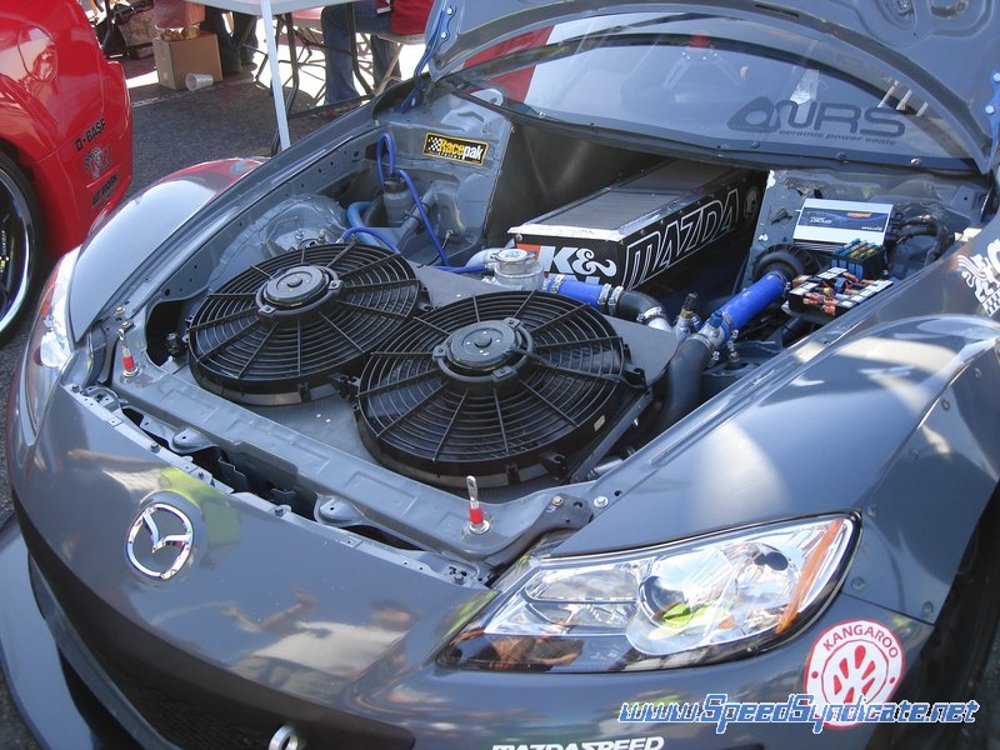
A race or performance build changes the electrical system as much as the engine. Electric cooling fans replace the mechanical fan. Fuel pumps get bigger, and sometimes there are two. Ignition, engine management, data logging, cameras and cooling pumps all want steady voltage. Between hot laps the car may sit idling with fans on high. This page explains why voltage matters to performance, what to consider for a race or street performance car, and how to find a high output alternator for your build.
Find your alternator. Choose your car's make, model and engine in the GET AMPS FOR selector at the top of this page, or start from the full list of makes.
Find Your Alternator
Why Voltage Matters to Performance
Modern engines are run by a computer that depends on stable voltage. Fuel injectors, ignition coils and fuel pumps all perform best at their designed voltage. A fuel pump's output can fall as voltage drops, and engine management may protect the engine when voltage is low. The result can be lost power exactly when the electrical load is highest. We explain more in The Truth About the Underdrive Crank Pulley.
Where Race and Performance Builds Add Load
- Electric cooling fans: large draw at start-up and steady draw while running, often at idle in the pits or staging lanes.
- Fuel system: high-flow or dual fuel pumps for higher horsepower.
- Ignition and engine management: aftermarket ignition boxes, coils and standalone ECUs.
- Cooling and support pumps: electric water pumps, intercooler pumps and oil coolers.
- Data and video: loggers, dash displays, cameras and transponders.
- Street builds: a big stereo or lighting on top of everything above.
Pulleys, RPM and Output
Alternator output depends on how fast it spins. A smaller crank pulley slows every accessory, including the alternator, which lowers output at idle and low RPM. High-revving engines raise the opposite question: the alternator must be safe at the engine's maximum RPM through its pulley ratio. Before changing pulleys, read our article on underdrive crank pulleys and ask us about your engine's RPM range.
Choosing a Racing Alternator
- Start with fitment. Choose your car's year, make, model and engine in our selector. Only alternators listed for that vehicle should be considered.
- Add up the electrical load. Fans, pumps, ignition and electronics running together, including at idle in the pits.
- Look at output at low RPM. Idle and low engine speed are where most cars fall short. Each product page lists its output ratings.
- Size the charge wire and fuse. See our BIG ZERO 0 AWG wire kit and 350 amp ANL fuse block kit. Follow your sanctioning body's rules for battery location, cutoff switches and wiring.
- Swapped engine or custom mount? If no direct fit high output alternator is listed, our Fitzall universal alternator may work. Customers have mounted it on engines such as the Toyota 2JZ-GTE; see the Fitzall installation examples. Modifications can be required.
Building a show car as well as a fast one? See our chrome and powder coated alternators.
Frequently Asked Questions
Do race cars run without an alternator?
Some short-duration race cars run a battery-only system. Cars that run longer sessions, idle in the pits or are also driven on the street generally need an alternator that keeps up with their load.
Will a high output alternator cost horsepower?
An alternator takes more power from the engine only when the electrical system asks for more current. Low voltage can also cost performance through fuel and ignition, so a charging system that keeps up is part of the build.
What about an underdrive crank pulley?
It slows the alternator and lowers output, especially at idle. Read our article before fitting one to a car with electric fans and a high-load fuel system.
How do I know an alternator fits my car?
Use the year, make, model and engine selector. The store's terms ask customers to verify fitment before ordering. For engine swaps, contact us with the engine and the chassis before you buy.



 View ALL Makes
