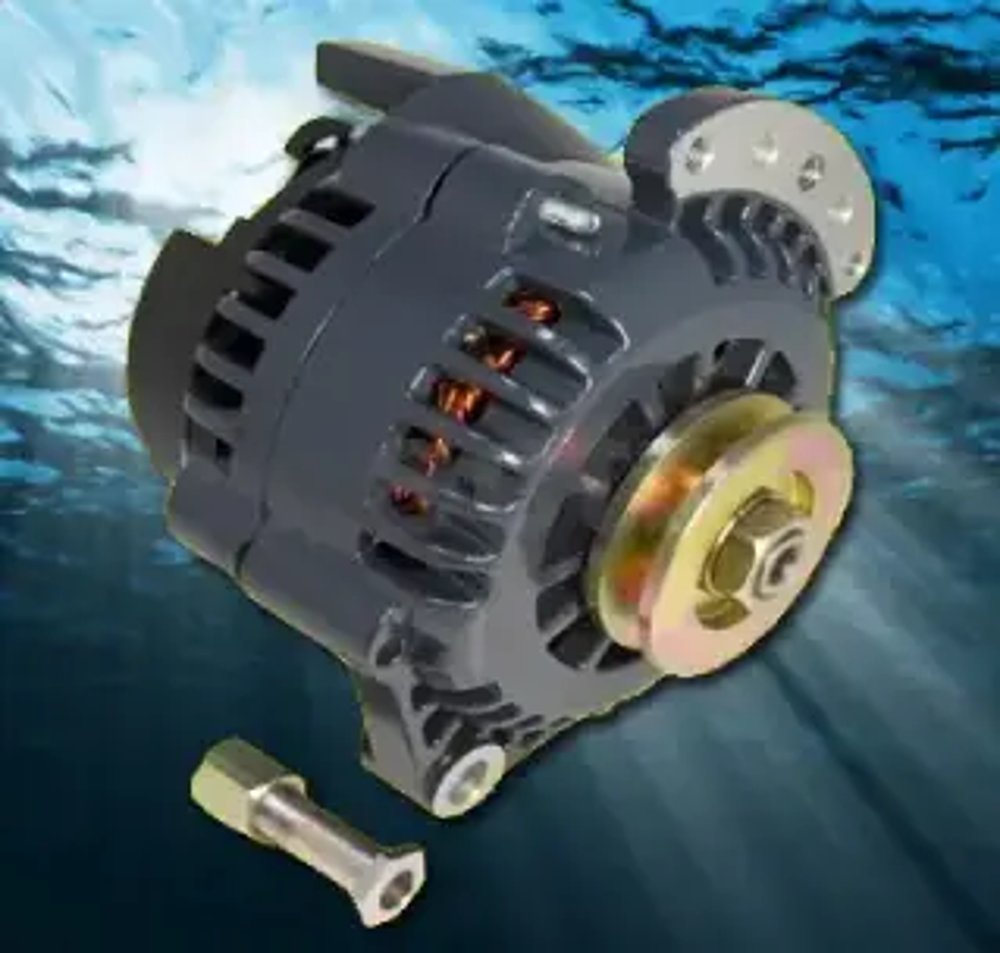
On a boat, the engine's alternator often charges more than the starting battery. Fish finders, chartplotters, radios, livewell and bilge pumps, lights, refrigeration and a house battery bank all depend on it, and sometimes an inverter or a trolling motor bank as well. A stock marine alternator is usually sized to run the engine and keep the starting battery charged. This page explains how a boat's charging system works, what to check for marine use, and how our Fitzall 220A+ marine alternator fits in.
How a Boat Uses Its Alternator
- Starting battery: replaces the charge used to start the engine.
- Electronics: sonar, chartplotters, radar, radios and stereos run whenever the boat is in use.
- Pumps and lights: livewells, bilge and washdown pumps, navigation and deck lights.
- House bank: on cruisers and larger boats, a separate bank runs refrigeration, cabin lights and an inverter.
- Trolling motor bank: on many fishing boats, a separate bank powers the trolling motor and is charged by its own charger or from the engine.
More batteries and more electronics mean more to recharge between runs. A higher output alternator shortens that recharge while the engine runs.
Marine Considerations Before You Upgrade
Ignition protection
Electrical equipment in a gasoline engine compartment must meet ignition protection requirements, because fuel vapor can collect there. Before installing any alternator on a boat, confirm with us and your marine technician that it meets the requirements for your boat and engine.
Corrosion
Salt air and spray are hard on terminals, cables and grounds. Use marine-grade tinned cable and sealed connections, and inspect them regularly.
Charging more than one bank
Boats with separate starting, house or trolling motor banks need a way to share alternator charging between them, such as an isolator, a combiner or a DC-DC charger. Our 270 amp two-post battery isolator charges two banks from one alternator while keeping them separate. Follow your battery maker's charging instructions.
Pulley, belt and mounting
Marine engines use a variety of belt drives. The Fitzall marine alternator is offered with single V-belt, double V-belt, 6 groove and 8 groove serpentine pulleys. Mounting can require brackets or spacers; see the Fitzall installation examples.
Sizing the Charging System
- List what runs while under way: engine electronics, navigation, sonar, pumps, lights and anything on the inverter.
- Add the battery recharge: what the house and trolling banks use between runs, divided by the time you run the engine.
- Consider idle and trolling speeds: slow speeds mean low engine RPM. The Fitzall marine alternator lists 110+ amps at idle.
- Size the cables and fuses: a higher output alternator needs a charge cable and circuit protection sized for its current. See our 350 amp ANL fuse block kit.
Not sure what your boat needs? Contact us with the boat, the engine make and model, and a list of the electrical equipment on board.
Frequently Asked Questions
Can I use an automotive alternator on a boat?
Boats have requirements cars do not, including ignition protection in gasoline engine compartments and corrosion resistance. Use an alternator intended for marine use and confirm it suits your boat before installing.
Will the Fitzall marine alternator fit my engine?
It is a universal unit with several pulley options. Fit depends on your engine's mounting and belt layout. Contact us with the engine make and model before you order.
Can the alternator charge my trolling motor batteries?
It can, through an isolator, combiner or DC-DC charger suited to those batteries. Many anglers also use an onboard shore-power charger.
Do I need a bigger charge cable?
Usually, yes. The factory cable was sized for the factory alternator. Size the cable and fuse for the new alternator's output and the cable length.



 View ALL Makes
